
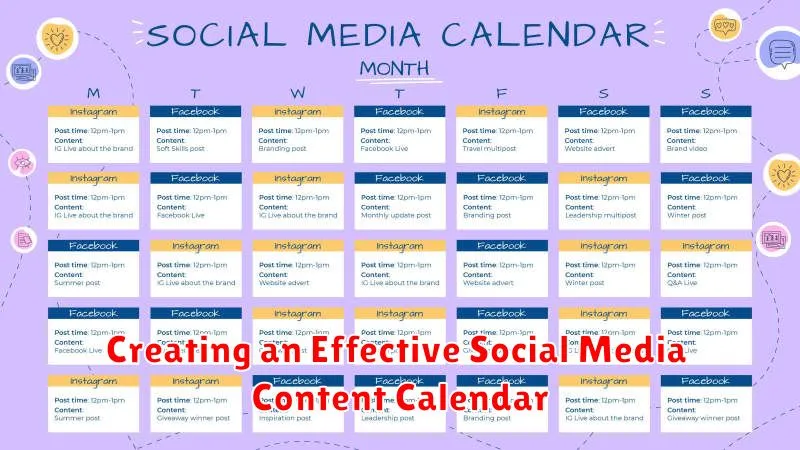
In today’s digital landscape, a robust and well-planned social media presence is crucial for any business or individual seeking to expand their reach and cultivate a thriving online community. A social media content calendar serves as the essential backbone of this strategy, providing a structured roadmap for content creation, scheduling, and publication. Creating an effective social media content calendar empowers you to strategically manage your social media activities, maintain consistency, and achieve measurable results. This comprehensive guide will delve into the key components of crafting a content calendar that maximizes engagement and drives success across various platforms.
This article will provide a step-by-step guide to creating an effective social media content calendar that aligns with your specific goals and target audience. Learn how to plan your content strategically, schedule posts effectively, and track your performance to optimize your social media strategy. We’ll cover essential elements such as content themes, post types, optimal posting times, and performance analysis. By mastering the art of the social media content calendar, you can transform your social media presence from reactive to proactive, ensuring a consistent brand voice and a streamlined workflow. Prepare to unlock the full potential of your social media marketing efforts through the power of effective planning and organized execution.
Why You Need a Social Media Plan
A social media plan provides a strategic roadmap for your online presence. Without a plan, your efforts become disjointed and ineffective. A well-defined plan ensures consistent branding, targeted content delivery, and measurable results.
It helps you define your target audience and tailor your content to resonate with them. This leads to increased engagement and ultimately, a stronger connection with your followers.
Furthermore, a plan enables you to track your progress and identify what’s working and what isn’t. This allows for data-driven adjustments to optimize your strategy and achieve your social media goals, whether those are increasing brand awareness, driving website traffic, or generating leads.
Planning Themes and Campaigns
Themes provide a framework for your content, ensuring consistency and a cohesive brand identity. Choose themes relevant to your audience and business objectives. For example, a fitness brand might focus themes on healthy eating, workout routines, or motivational stories.
Campaigns are time-bound, focused initiatives designed to achieve specific goals. These could be product launches, seasonal promotions, or brand awareness campaigns. Campaigns utilize multiple content formats across different platforms to maximize impact.
Planning both themes and campaigns requires careful consideration of your target audience, platform demographics, and overall marketing strategy. Aligning your content calendar with these elements is crucial for effective social media marketing.
Scheduling Tools and Automation
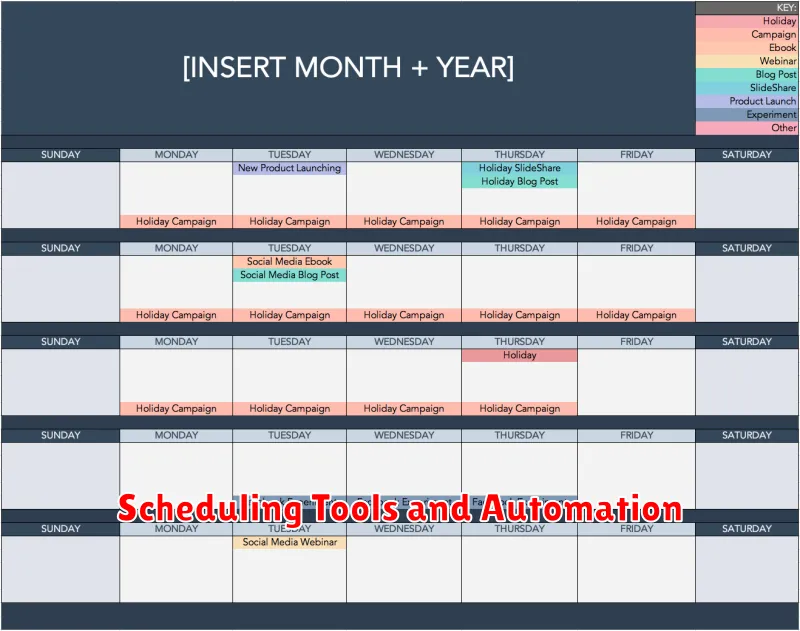
Efficiency is key when managing a social media content calendar. Leveraging scheduling tools allows for pre-planned posting across various platforms. This eliminates the need for manual, real-time uploads, freeing up time for other essential tasks.
Several tools offer diverse features, including content creation, analytics tracking, and engagement monitoring. Choosing the right tool depends on individual needs and budget. Some popular options include free, basic schedulers alongside more advanced, paid platforms.
Automation further streamlines the process. Automated posting ensures consistent content delivery, even during off-peak hours. This can increase visibility and reach a wider audience.
Balancing Promotions and Value
A successful social media content calendar requires a careful balance between promotional content and valuable, engaging content. Overly promotional posts can deter followers, while a lack of promotion can hinder business growth. Finding the right balance is key to building a strong and engaged audience.
Focus on the 80/20 rule: 80% of your content should provide value to your audience, such as educational resources, entertaining posts, or behind-the-scenes glimpses. The remaining 20% can be dedicated to promoting your products or services.
Value-driven content builds trust and establishes you as an authority in your field. This fosters a loyal following who are more receptive to your promotional messages when they are strategically interspersed.
Reviewing Performance and Adjusting
A crucial aspect of maintaining a successful social media presence involves consistently reviewing content performance and making necessary adjustments to your calendar. Data analysis is key to understanding what resonates with your audience.
Track key metrics such as engagement (likes, comments, shares), reach, and website traffic. Identify top-performing posts and analyze their common elements: time of posting, topic, format, etc. This insight will inform future content creation.
Don’t be afraid to experiment with different content types and posting schedules. If certain posts consistently underperform, adjust your strategy. This iterative process is essential for optimizing your social media content calendar and achieving your goals.
