

Launching a new product can be a daunting task, but with the right strategies, you can achieve remarkable success. In today’s digital age, leveraging the power of online advertising is crucial for reaching your target audience and driving sales. This article will provide a comprehensive guide on how to launch a successful product using digital ads, covering everything from market research and target audience identification to ad campaign creation, optimization, and performance analysis. Whether you’re launching a physical product, a software application, or a service, understanding the intricacies of digital advertising is essential for a successful product launch.
Digital advertising offers unparalleled opportunities to connect with potential customers precisely when they’re most receptive to your message. By utilizing a range of digital ad platforms like Google Ads, social media advertising, and programmatic advertising, you can effectively target your ideal customer profile. This article will explore the essential steps involved in creating highly effective digital ad campaigns, from keyword research and ad copywriting to bidding strategies and conversion tracking. Learn how to maximize your return on investment (ROI) and achieve a successful product launch through strategic digital advertising.
Defining Goals for Your Product Launch
Before launching any digital ad campaign, it’s crucial to define clear and measurable goals. This ensures your efforts are focused and contribute to overall product success. Goal setting provides a roadmap for your campaign and allows you to track progress effectively.
Consider what you want to achieve with your product launch. Do you want to maximize brand awareness, drive sales, or generate leads? Each of these requires a different approach to your digital advertising strategy. Specific, Measurable, Achievable, Relevant, and Time-Bound (SMART) goals are essential for a successful product launch.
For example, a SMART goal could be to increase website traffic by 20% within the first month of the product launch. Or, you might aim to generate 500 qualified leads within the first two weeks. By establishing these concrete objectives, you can tailor your ad campaigns and measure their impact accurately.
Choosing the Right Ad Platform
Selecting the right ad platform is crucial for a successful product launch. Your choice depends on several factors, including your target audience, budget, and campaign goals.
Popular platforms like Google Ads offer broad reach and diverse targeting options, making them suitable for various products. Social media platforms such as Facebook, Instagram, and TikTok allow for precise audience targeting based on demographics, interests, and behaviors. Consider platforms like LinkedIn for B2B products.
Evaluate each platform’s pricing models, ad formats, and analytics capabilities to determine the best fit for your product launch strategy.
Budget Planning and Campaign Phases
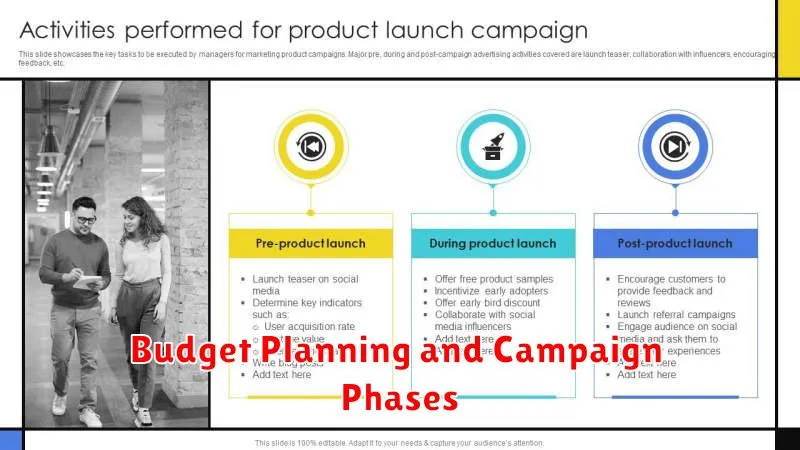
Budget allocation is crucial for a successful product launch using digital ads. Determine your total budget and divide it strategically across different campaign phases.
Typically, a campaign includes three phases: awareness, consideration, and conversion. The awareness phase requires a larger budget share to reach a wider audience. As the campaign progresses to the consideration and conversion phases, the budget can be adjusted to focus on retargeting and driving sales.
Consider using a percentage-based allocation. For example:
- Awareness: 50%
- Consideration: 30%
- Conversion: 20%
This breakdown allows for flexibility based on campaign performance.
Creating Ad Copy That Drives Clicks
Compelling ad copy is crucial for a successful digital ad campaign. It’s the bridge between your product and potential customers. Write copy that is concise, engaging, and directly addresses the needs and desires of your target audience.
Highlight key benefits and unique selling propositions. Focus on what problems your product solves and how it improves their lives. Use strong action verbs to encourage immediate engagement.
A clear call to action is essential. Tell your audience exactly what you want them to do, whether it’s “Shop Now,” “Learn More,” or “Get a Free Quote.” Testing different variations of your ad copy can help determine which performs best.
Landing Page Optimization
A highly optimized landing page is crucial for digital ad success. It’s where users land after clicking your ad, and its effectiveness directly impacts your conversion rates. A poorly designed landing page can lead to high bounce rates and wasted ad spend.
Key elements of landing page optimization include:
- Message Match: Ensure the landing page message aligns with the ad copy. Users should see what they expect based on the ad they clicked.
- Clear Call to Action: A prominent and compelling call to action (CTA) guides users towards the desired conversion, whether it’s a purchase, sign-up, or download.
- Fast Loading Speed: A slow-loading page can frustrate users and lead to abandonment. Optimize images and minimize unnecessary code.
- Mobile Responsiveness: Ensure your landing page adapts seamlessly to different screen sizes for a positive user experience on all devices.
Testing different versions of your landing page (A/B testing) allows you to identify what resonates best with your target audience and continuously improve its performance.
Using Retargeting to Capture Leads
Retargeting is a powerful digital advertising strategy that allows you to re-engage users who have previously interacted with your product or website. By strategically displaying ads to these individuals, you can effectively recapture their interest and guide them towards conversion.
This method is particularly effective because these users have already demonstrated some level of interest in your offering. Retargeting campaigns typically see higher click-through and conversion rates compared to campaigns targeting cold audiences.
Key benefits of retargeting include increased brand recall, improved conversion rates, and a higher return on ad spend. It allows you to nurture leads who may not have been ready to purchase on their initial visit, ultimately maximizing your chances of acquiring a customer.
Analyzing Results and Adjusting Fast
After launching your digital ad campaigns, continuous monitoring and analysis are crucial. Don’t wait weeks to evaluate performance. Start analyzing data within the first few days.
Pay close attention to key metrics such as click-through rate (CTR), conversion rate, and cost per acquisition (CPA). Identify which ads and targeting parameters are performing well and which are underperforming.
Based on your analysis, be prepared to adjust your campaigns quickly. This might involve tweaking ad copy, refining targeting parameters, or reallocating budget to higher-performing campaigns. Rapid iteration is key to optimizing campaign performance and achieving a successful product launch.
Case Studies of High-Converting Launches
Examining successful product launches provides valuable insights for your own campaigns. Let’s explore two examples:
Case Study 1: The Minimalist Watch
This company utilized targeted Facebook and Instagram ads showcasing the watch’s sleek design and affordable price point. Influencer marketing played a key role, driving pre-orders and creating initial buzz. The result? A 200% return on ad spend (ROAS) within the first month.
Case Study 2: The Productivity App
Focusing on solving a specific user pain point, this app’s launch campaign leveraged search ads and content marketing. Free trial offers and testimonials from beta users built trust and generated significant downloads. The campaign achieved a 150% ROAS and established a loyal user base.
