
In today’s data-driven marketing landscape, making informed decisions is paramount to success. Analytics reports provide invaluable insights into campaign performance, audience behavior, and overall marketing effectiveness. For marketers seeking to optimize their strategies and achieve measurable results, monitoring key analytics reports is not just recommended, it’s essential. This article will outline five essential analytics reports that every marketer should monitor to gain a comprehensive understanding of their marketing efforts and drive data-driven decision-making.
From understanding website traffic and conversion rates to tracking social media engagement and campaign ROI, these reports provide a holistic view of your marketing performance. By regularly monitoring these key metrics, marketers can identify areas for improvement, optimize campaigns in real-time, and ultimately achieve better results. Dive in to discover the five analytics reports that will empower you to make data-backed decisions and maximize your marketing impact.
Traffic Source Breakdown
Understanding where your website traffic originates is crucial for optimizing marketing campaigns and resource allocation. A traffic source breakdown report segments visitors based on their origin, such as organic search, paid advertising, social media, referrals, or direct traffic.
This report provides insights into which channels are most effective at driving qualified traffic to your site. By analyzing this data, you can identify high-performing sources and invest more resources in those areas. Conversely, underperforming sources can be reevaluated and potentially optimized or discontinued.
Analyzing traffic sources can also reveal valuable information about user behavior. For instance, users arriving from organic search may exhibit different engagement patterns compared to those from paid advertising. This information can inform content strategy and user experience improvements.
Top-Performing Pages
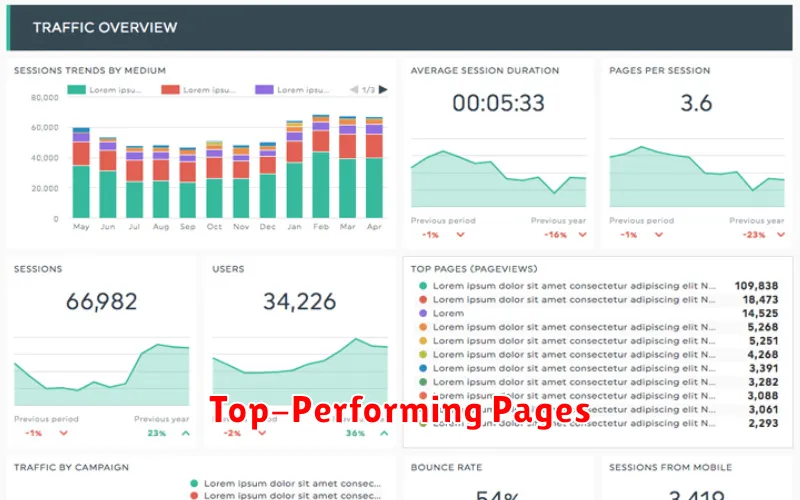
Understanding which pages resonate most with your audience is crucial for optimizing content and campaigns. The Top-Performing Pages report reveals your most popular content based on key metrics like pageviews, unique pageviews, and average time on page.
By analyzing this report, you can identify high-performing content and replicate its success. Look for patterns in the top pages. Do they share similar topics, formats, or calls to action? This information can inform future content creation strategies.
Conversely, identifying underperforming pages allows you to diagnose issues and make improvements. Low pageviews or a high bounce rate might suggest problems with content quality, user experience, or search engine optimization (SEO).
User Behavior Flow
The User Behavior Flow report provides valuable insights into how users navigate your website. It visually represents the paths users take, from the landing page through various interactions.
This report helps identify key drop-off points, where users abandon their journey. By understanding these points of friction, you can optimize your website’s design and content to improve user experience and ultimately, conversions.
Analyzing the User Behavior Flow can reveal unexpected user behavior patterns. This information can be leveraged to improve website navigation, streamline the user journey, and create more effective calls to action.
Goal Conversion Reports
Goal conversion reports provide crucial insights into how effectively your marketing campaigns are driving desired actions on your website. These reports track the completion of specific goals, such as form submissions, purchases, or sign-ups.
By monitoring these reports, you can identify which campaigns and channels are most effective at driving conversions. This data enables you to optimize your marketing efforts by allocating resources to high-performing channels and refining campaigns that are underperforming.
Analyzing goal conversion reports allows you to measure the return on investment (ROI) of your marketing activities and make data-driven decisions to improve overall campaign performance.
Bounce and Exit Rate Trends
Monitoring bounce and exit rates provides valuable insights into user behavior on your website. A high bounce rate may indicate issues with page relevance, site design, or technical problems. A high exit rate, while not always negative, can highlight pages that require attention. Analyzing trends in these metrics is key. Are they improving or worsening? This information helps guide optimization efforts.
Track these metrics over time to identify patterns and potential problems. For instance, a sudden spike in bounce rate on a specific landing page could suggest a technical issue or poorly targeted advertising campaign. Similarly, a consistently high exit rate on a product page might indicate a problem with the checkout process or product information.
