
In today’s competitive digital landscape, achieving high search engine rankings is crucial for online success. Understanding Google’s E-E-A-T principles – Experience, Expertise, Authoritativeness, and Trustworthiness – is paramount for improving your website’s visibility and driving organic traffic. This comprehensive guide will delve into the nuances of E-E-A-T and provide actionable strategies to optimize your content and website to align with Google’s quality standards. By prioritizing E-E-A-T, you can establish your website as a credible and reliable source of information, ultimately boosting your SEO performance and reaching a wider audience. Mastering E-E-A-T for SEO success requires a deep understanding of how these factors contribute to a positive user experience and build confidence in your brand.
This article will explore the significance of each element of E-E-A-T – Experience, Expertise, Authoritativeness, and Trustworthiness – and how they collectively contribute to a website’s SEO success. We’ll examine how demonstrating genuine experience, proven expertise, recognized authoritativeness, and unwavering trustworthiness can positively influence your search engine rankings. Learn how to incorporate E-E-A-T principles into your content creation, website design, and overall online presence to enhance your visibility on Google and connect with your target audience effectively. By understanding and implementing these crucial elements, you’ll gain a competitive edge in the ever-evolving world of SEO. This guide provides the insights and tools you need to optimize your website for E-E-A-T and achieve lasting SEO success.
What Is E-E-A-T in SEO?
E-E-A-T stands for Experience, Expertise, Authoritativeness, and Trustworthiness. It represents a set of factors Google uses to assess the quality of content and the credibility of websites. While not a direct ranking factor itself, E-E-A-T is crucial for demonstrating value and building confidence with both users and search engines.
Essentially, Google aims to surface content from sources it deems reputable and knowledgeable. E-E-A-T helps determine whether a website or content creator is a credible source of information on a given topic.
The Role of Experience in Ranking
Experience, within the context of E-E-A-T, refers to firsthand or demonstrable involvement with the topic. It’s a critical factor, particularly for Your Money or Your Life (YMYL) topics. Google wants to ensure that content providing advice on sensitive subjects like finance, health, or safety comes from demonstrably experienced sources.
While formal credentials aren’t always necessary, demonstrating practical experience is crucial. This might involve sharing personal anecdotes, showcasing the results of applied knowledge, or citing real-world examples. For businesses, this could mean highlighting customer testimonials, case studies, or years of operation within a specific industry.
Experience signals trustworthiness and builds user confidence. It shows that the content creator isn’t just regurgitating information but has a genuine understanding derived from practical application.
Building Expertise Through Content
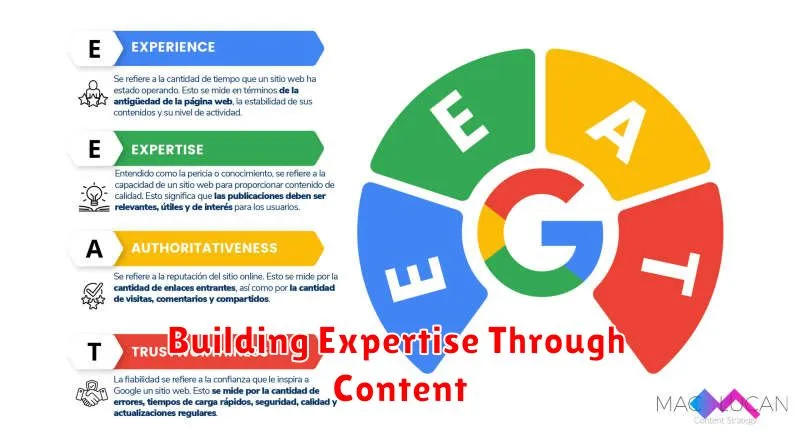
Demonstrating expertise is crucial for E-E-A-T. High-quality content plays a pivotal role in showcasing this expertise to both users and Google. Content should be accurate, comprehensive, and offer unique insights.
Original research, data-driven analysis, and clear explanations of complex topics can all contribute to establishing expertise. Avoid simply rehashing information readily available elsewhere. Instead, focus on providing value by offering a fresh perspective or synthesizing information in a novel way.
Why Authoritativeness Matters
Authoritativeness is a critical component of E-E-A-T and significantly impacts your website’s ranking in Google search results. It refers to the reputation and credibility of your website and content creators on a given topic. Google wants to ensure users find information from trusted sources, and authoritativeness serves as a key indicator of trustworthiness.
High authoritativeness signals to Google that your content is reliable and accurate, increasing the likelihood of it ranking higher. This can lead to increased visibility, more organic traffic, and ultimately, greater success for your website.
Trust Signals Google Looks For
Google uses a variety of trust signals to assess the credibility and authority of websites. Understanding these signals is crucial for improving your site’s E-E-A-T and overall SEO performance.
HTTPS is foundational. Secure sites are favored by Google and instill user confidence.
Backlinks from reputable and authoritative websites signal to Google that your content is valuable and trustworthy. The quality of these backlinks is more important than the quantity.
Contact Information is crucial. Clearly displaying your business’s contact information demonstrates transparency and builds trust with both Google and users.
Positive Reviews on platforms like Google My Business, Yelp, and industry-specific review sites can positively influence Google’s perception of your trustworthiness.
A well-established online presence including consistent branding and activity across social media platforms can also enhance your site’s trustworthiness.
How to Apply E-E-A-T to Blog Posts
Elevating your blog’s E-E-A-T (Experience, Expertise, Authoritativeness, and Trustworthiness) is crucial for SEO success. Focus on demonstrating these qualities within each post.
Experience: Share firsthand experiences or case studies. If you lack direct experience, cite reputable sources and focus on synthesizing information in a helpful way. Clearly distinguish between personal experience and sourced information.
Expertise: Showcase your knowledge through detailed, well-researched content. Use accurate terminology and avoid generalizations. Fact-check everything.
Authoritativeness: Position yourself as an authority by referencing credible sources and linking to supporting data (when appropriate). A clear and professional writing style contributes to authoritativeness.
Trustworthiness: Be transparent about your sources and any potential biases. Maintain an accurate and updated ‘About Us’ section. Ensure your website is secure (HTTPS). Prioritize user experience by presenting information clearly and concisely.
Common E-E-A-T Mistakes to Avoid
Many websites inadvertently sabotage their E-E-A-T by committing common errors. Failing to accurately represent expertise is a significant oversight. Content should be authored or reviewed by qualified individuals and clearly demonstrate that expertise.
Lack of demonstrable experience is another frequent mistake. While expertise can be gained through study, experience often requires practical application. Highlighting relevant experience, where applicable, can greatly enhance E-E-A-T.
Overlooking authoritativeness is a critical error. Establishing authority involves building a reputation for providing reliable and trustworthy information. Ignoring reviews, testimonials, and other trust signals weakens authoritativeness.
Finally, neglecting trustworthiness can undermine all other E-E-A-T efforts. Ensure content accuracy, transparency in sourcing, and secure website practices to build and maintain trust.
