
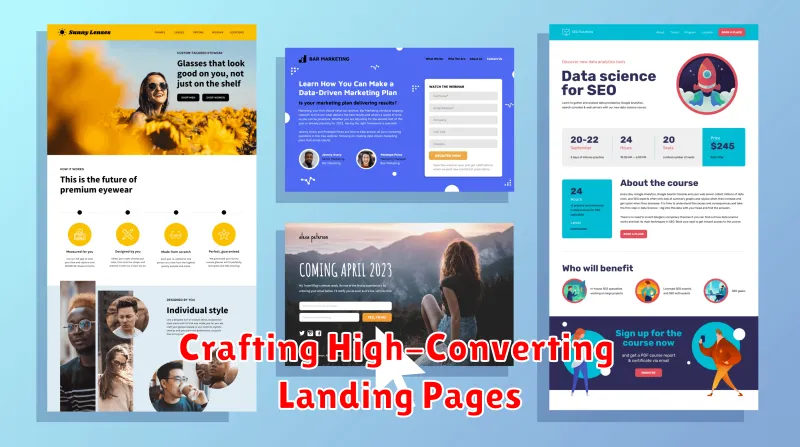
In the competitive digital landscape, a high-converting landing page is paramount to online success. It serves as the crucial bridge between attracting potential customers and converting them into valuable leads or sales. This article delves into the essential elements of crafting high-converting landing pages that captivate your target audience, drive engagement, and ultimately maximize your return on investment. Understanding the principles of effective landing page design and optimization is crucial for any business seeking to thrive online. From compelling headlines and persuasive copy to strategic call-to-actions and user-friendly design, we will explore the key components that contribute to a high-converting landing page.
Whether you’re an experienced marketer or just starting out, this guide will provide actionable insights and practical tips to elevate your landing page performance. Learn how to create high-converting landing pages that seamlessly align with your marketing campaigns, resonate with your ideal customer, and ultimately drive significant business growth. Discover the secrets to optimizing your landing pages for conversions and unlock the true potential of your online presence. We will cover everything from A/B testing and analytics to mobile optimization and user experience, empowering you to craft high-converting landing pages that deliver exceptional results.
Essential Elements of a Landing Page
A high-converting landing page needs several key elements working together. A compelling headline is crucial for grabbing attention and clearly communicating the value proposition. This should be supported by concise and persuasive body copy that highlights the benefits and addresses potential customer pain points.
A clear call to action (CTA) is essential, telling visitors exactly what you want them to do. This could be “Sign Up Now,” “Get a Free Quote,” or “Download the Brochure.” The CTA should be visually prominent and easy to find.
Trust signals are important for building credibility. These can include testimonials, client logos, security badges, or guarantees.
Finally, an optimized form is necessary for capturing leads. Keep the form fields minimal, only requesting essential information to reduce friction.
Headline and CTA Placement
The placement of your headline and call to action (CTA) is crucial for landing page success. Strategic placement guides visitors towards the desired conversion.
Typically, the headline appears above the fold, instantly communicating the value proposition. Keep it concise and compelling. The CTA should also be easily visible above the fold, though repeating it further down the page can be beneficial. Consider using a contrasting color for your CTA button to make it stand out.
A/B testing different headline and CTA placements can help determine the most effective layout for your specific audience.
Trust Signals and Visual Hierarchy

Trust signals play a crucial role in converting visitors into customers. Incorporating elements like testimonials, security badges, and client logos can significantly boost credibility.
Visual hierarchy guides the visitor’s eye towards the most important elements on the page. Using headings, subheadings, whitespace, and color contrast effectively directs attention to your call to action and key information.
A clear visual hierarchy combined with strategically placed trust signals creates a persuasive and user-friendly experience, ultimately increasing conversion rates.
Optimizing for Speed and Mobile
In today’s fast-paced digital world, speed is paramount. A slow-loading landing page can drastically impact your conversion rates. Users expect near-instantaneous page loads, and delays can lead to frustration and abandonment. Page speed optimization is therefore crucial for success.
Equally important is mobile optimization. With the majority of internet traffic now coming from mobile devices, ensuring your landing page is fully responsive and provides a seamless mobile experience is non-negotiable. This includes aspects like touch-friendly buttons, optimized images, and a mobile-first design approach.
Consider using tools like Google PageSpeed Insights to identify areas for improvement and prioritize optimizations that will have the biggest impact on both desktop and mobile performance.
Testing and Iterating for Performance
Creating a high-converting landing page isn’t a one-and-done process. Continuous testing and iteration are crucial for optimizing performance. This involves analyzing key metrics and making data-driven adjustments.
A/B testing allows you to compare different versions of your landing page to determine which performs better. Test individual elements like headlines, call-to-action buttons, and form fields to identify areas for improvement.
Track metrics such as conversion rates, bounce rates, and time spent on page. Use this data to understand user behavior and identify bottlenecks in the conversion funnel. Iterate based on your findings, constantly refining your landing page to maximize its effectiveness.
